
Florida Roof Geometry Wind Mitigation Guide
Roof geometry is one of the strongest wind mitigation credits on the Florida inspection form.
How Roof Geometry Is Graded on the Wind Mitigation Form
Inspectors classify the roof shape using the OIR‑B1‑1802 form. The form evaluates the entire roof system perimeter and determines whether the home qualifies for the hip roof credit. Roof geometry is one of the most valuable wind mitigation credits because roof shape directly affects wind performance.
Roof Geometry Options (Florida OIR‑B1‑1802)
- Option A – Hip Roof (Best credit):
A hip roof with no other roof shapes greater than 10% of the total roof system perimeter.
Inspectors record:
• Total length of non‑hip features
• Total roof system perimeter
(Matches: “Hip roof with no other roof shapes greater than 10% of the total roof system perimeter.”) - Option B – Flat Roof (Multi‑unit buildings only):
A flat roof applies only to buildings with five or more units where at least 90% of the main roof area has a slope less than 2:12.
Inspectors record:
• Roof area with slope less than 2:12
• Total roof area
(Matches: “Roof on a building with five (5) or more units… slope less than 2:12.”) - Option C – Other Roof:
Any roof shape that does not qualify as Hip or Flat.
This includes gable roofs, combination roofs, and any roof with non‑hip features exceeding 10% of the perimeter.
(Matches: “Any roof that does not qualify as either (A) or (B).”)
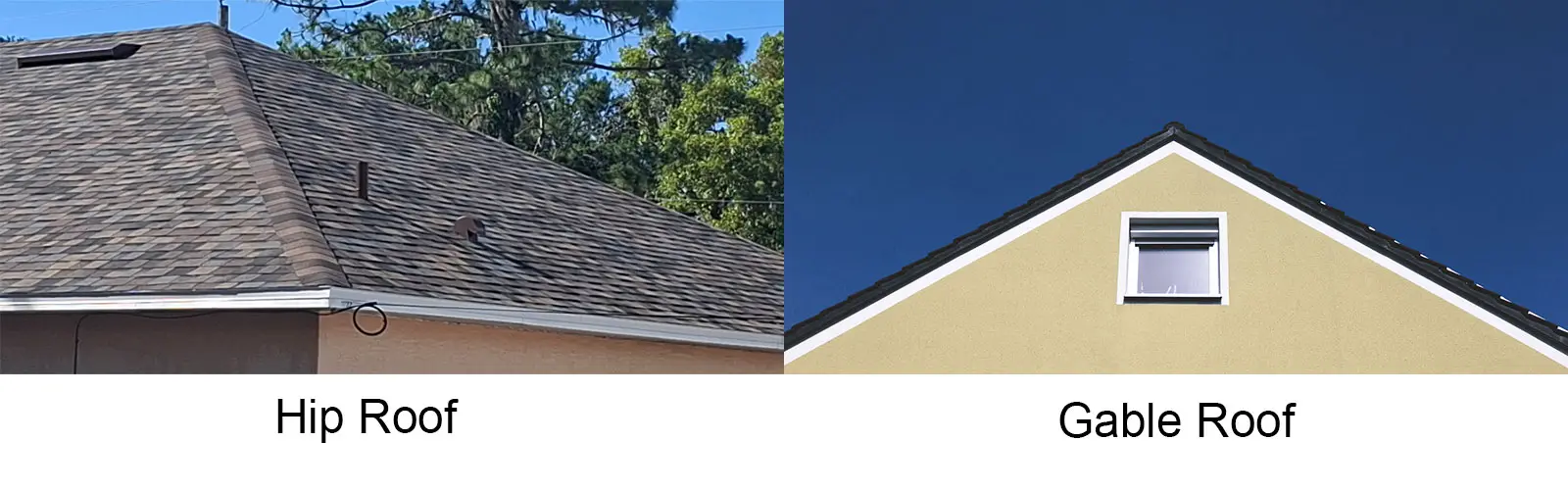
Which Roof Geometry Gets the Best Credit?
On the Florida wind mitigation form, Option A (Hip Roof) receives the strongest credit. Hip roofs perform better in high winds because they have fewer flat surfaces and reduced uplift exposure. Homes with hip roofs typically receive lower premiums compared to homes with gable or combination roofs.
Why Roof Geometry Matters for Insurance
Roof shape plays a major role in wind performance. Hip roofs distribute wind loads more effectively, reducing the chance of structural damage. Carriers reward this with stronger wind mitigation credits. If your home has a gable or combination roof, you may still qualify for other credits, but roof geometry remains one of the most impactful factors.
If you have a wind mitigation report and want to know how your roof geometry affects your premium, I can review the form and apply all eligible credits across multiple Florida carriers.
Wind Mitigation Knowledge Center
Explore detailed guides for each wind mitigation feature:
- Florida Roof Covering & Product Approval Listing
- Roof Deck Attachment
- Roof‑to‑Wall Connection
- Roof Geometry
- Sealed Roof Deck / Secondary Water Resistance (SWR)
- Opening Protection
- Florida Wind Mitigation Inspection Hub
For personalized quotes with all eligible wind mitigation credits applied, visit our
Florida Homeowners Insurance Quote Page.
Disclaimer: This guide reflects my interpretation of the Florida wind mitigation inspection form for the purpose of applying insurance credits. It is not a substitute for a licensed inspection. If you need clarification on any construction feature, material, or compliance item, please consult a licensed Florida home inspector or contractor.

Get Florida Home Insurance Quotes
If you’d like help reviewing home insurance options or need a quick binder for a lender or renewal, I make the process simple for your next real estate closing or policy update.
Related Florida Insurance Pages
Florida insurance content authored by Robert Colucci — underwriting insights and local market analysis for every Florida county & town.
Get a Florida Home Insurance Quote
No matter where you live in Florida, I can help you compare rates from multiple carriers and find the best homeowners insurance options for your property.
Ready to Get Started?
I’m here to help you find the right coverage at the right price — with no pressure and no confusion.