
Can I Get Florida Homeowners Insurance If the Seller Stays After Closing?
How Does Florida Home Insurance Work When the Seller Remains After Closing?
Yes, you may be able to obtain Florida homeowners insurance when the seller stays in the property after closing, but you must disclose the arrangement to the insurance carrier before coverage is bound. After closing, you own the home even if the previous owner is still living there. That temporary occupancy can affect how the new insurer classifies the risk, what policy form it will offer, and whether an endorsement or different arrangement is necessary. A short stay is not automatically acceptable under every owner-occupied homeowners policy.
For an out-of-state buyer, it may seem convenient to let the seller remain for a week or two while movers arrive or another transaction finishes. This is sometimes called a post-closing occupancy or seller rent-back agreement. However, the closing date and the date you take physical possession are not the same. The distinction matters to the insurance company, especially when you are applying for coverage as the home’s future primary resident.

Get Florida Home Insurance Quotes
Who Insures the Florida House After Ownership Transfers?
The new owner generally needs property insurance effective when ownership transfers at closing. The seller’s existing homeowners insurance should not be assumed to insure the building for the new owner after the sale. If there is a mortgage, the lender will typically require acceptable proof of insurance before funding.
But the identity of the person living in the home is a separate underwriting question. An insurer quoting a primary residence may have assumed that the buyer would occupy the dwelling at or shortly after closing. If the seller remains in possession, tell the agent the planned move-out date, whether the seller is paying rent or an occupancy fee, and when you expect to move in. The agent can then confirm what the carrier allows.
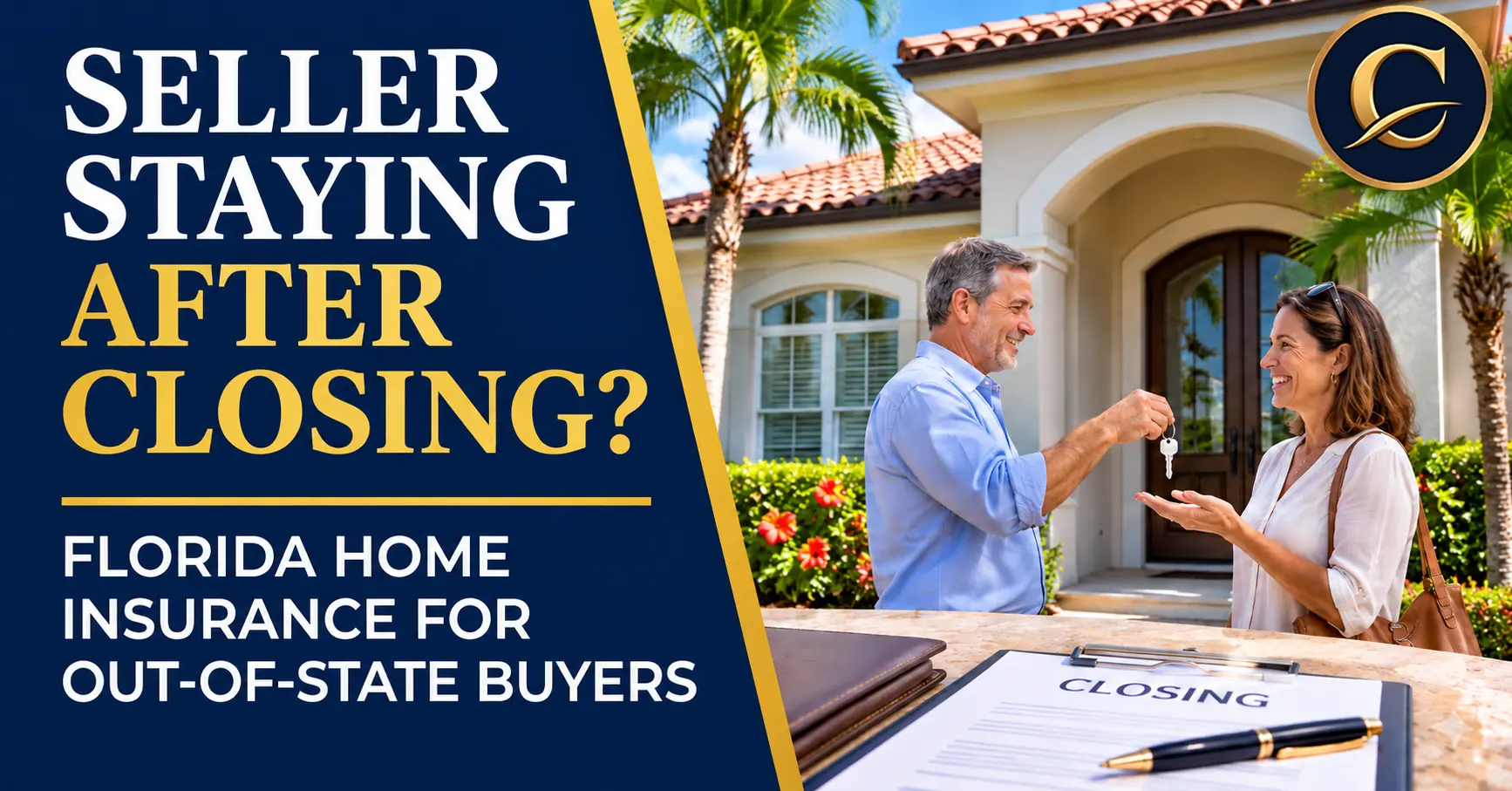
Will a Standard Owner-Occupied Homeowners Policy Cover a Seller Rent-Back?
Possibly, but do not assume so. Some carriers may consider a short, documented post-closing stay within their guidelines. Others may require a specific endorsement, different occupancy classification, or a policy appropriate for a home occupied by someone other than its owner. A carrier may decline the arrangement altogether.
The answer depends on the policy wording and the insurer’s underwriting requirements. Paying no rent does not automatically eliminate the occupancy issue; the key question is who owns the home, who is living there, and how the carrier defines the exposure. Florida’s Department of Financial Services explains that policy type and eligibility can depend on how a dwelling is occupied. For consumer background, see its homeowners insurance overview.
Does the Seller Need Separate Insurance While Staying in the House?
Yes, the seller should discuss continuing protection for personal belongings and personal liability with their own insurance professional. The new owner’s homeowners policy generally is not intended to insure the former owner’s household contents. Depending on the situation, the seller may need renters-style coverage or another suitable policy.
Both parties should confirm their responsibilities rather than assume that the seller’s old homeowners policy or the buyer’s new policy automatically covers every loss during the temporary stay. The purchase and occupancy agreements can allocate responsibilities between buyer and seller, but an agreement between them does not change what an insurance carrier has agreed to cover.
What Happens If a Hurricane or Water Leak Occurs Before the Seller Moves Out?
A covered loss can be particularly complicated when the property is owned by one person but occupied by another. The buyer’s coverage may depend on the policy form, perils insured against, exclusions, deductibles, and approved occupancy status. The seller’s belongings may require separate coverage. Questions about storm shutters, maintenance, utilities, emergency access, and prompt reporting of damage should be addressed before closing.
Florida buyers should also compare wind deductibles and water-damage provisions when obtaining quotes, rather than focusing only on the annual premium. A seller staying at the property does not eliminate those usual coverage considerations.
Could a Post-Closing Occupancy Agreement Affect Mortgage Approval?
It can. A lender making a loan for an owner-occupied home may have requirements regarding when the buyer takes occupancy. The permitted timing depends on the loan program and lender. Tell the loan officer about the seller’s intended stay before signing the arrangement so the lender can confirm whether it is acceptable. An insurance carrier’s approval does not automatically satisfy mortgage occupancy requirements, and vice versa.
For a related discussion of timing and lender documents, read Florida Home Insurance Closing Timeline and Florida Home Insurance Binder Delivery Process.
What Should Out-of-State Buyers Tell Their Insurance Agent?
Before requesting binding, be ready to share:
- The actual closing date and the date ownership transfers.
- The seller’s anticipated move-out date and the length of the temporary stay.
- Whether there is a rent-back or occupancy agreement, including any payment arrangement.
- Your planned move-in date and whether the home will be your primary, seasonal, or another type of residence.
- Any special property conditions, such as an existing claim, unfinished repairs, or outstanding inspections.
Ask the agent to verify the arrangement with the insurer and explain any conditions in writing. If the carrier cannot accommodate the arrangement, explore available alternatives before closing rather than trying to correct the policy after the seller has already remained in possession.
Is This the Same as Buying a Florida Home Before Moving From Another State?
Not quite. An out-of-state buyer may close on a vacant Florida home and move in later, while another buyer may close on a property still occupied by the seller. These are different situations from an insurance underwriting perspective. For additional guidance, see Can I Buy Florida Homeowners Insurance Before I Move There?, Can I Arrange Florida Homeowners Insurance Without Visiting the Property?, and Can I Change My Florida Homeowners Insurance Start Date If My Closing Is Delayed?.
Get Florida Home Insurance Quotes Before Agreeing to a Seller Rent-Back
If you’re buying a Florida home from another state and the seller wants to remain after closing, disclose the occupancy arrangement before you bind homeowners insurance. I can help compare carriers, verify occupancy requirements, and coordinate insurance documents with your closing timeline. The right policy needs to reflect the actual property and how it will be occupied—not just the closing date on the contract.
Explore my Florida home insurance guide for out-of-state buyers or get Florida homeowners insurance quotes.
If you’d like help reviewing home insurance options or need a quick binder for a lender or renewal, I make the process simple for your next real estate closing or policy update.
Florida Relocation Guides & Buyer Questions
Out-of-State Buyer Guides & Insurance Tips
- Michigan Buyers: How to Compare Florida Insurance Carriers From Out of State
- New York Buyers: How to Get a Florida Insurance Binder From Out of State
- Insurance Tips for Out-of-State Buyers in The Villages
- How Out-of-State Buyers Can Choose the Right Florida Home
- What Out-of-State Buyers Should Know About Florida Home Inspections
- Out-of-State Buyers: Florida Home Inspection Requirements Explained
- Why Florida Insurance Works Differently for Out-of-State Buyers
Florida Relocation Buyer Questions
- Can I Buy Florida Homeowners Insurance Before I Move There?
- Can I Get Florida Home Insurance Without a Florida Driver’s License?
- Can I Insure a Florida Home Before I Sell My House in Another State?
- Can I Get Florida Home Insurance Quotes Before Making an Offer?
- Does My Florida Homeowners Insurance Have to Start on Closing Day?
- Can I Use an Out-of-State Mailing Address for Florida Homeowners Insurance?
- Can I Get Florida Homeowners Insurance if I’m Moving in 30 Days?
- Can I Arrange Florida Homeowners Insurance Without Visiting the Property?
- Do Out-of-State Buyers Need a Four-Point Inspection for Florida Home Insurance?
- Do Out-of-State Buyers Need a Wind Mitigation Inspection for Florida Home Insurance?
- Can I Change My Florida Homeowners Insurance Start Date If My Closing Is Delayed?
- Can I Get Florida Homeowners Insurance If the Seller Stays After Closing?
- Can I Get Florida Homeowners Insurance If I Renovate Before Moving In?
- Can I Get Florida Homeowners Insurance If the House Is Vacant at Closing?
- Do I Need a Florida Homestead Exemption to Get Homeowners Insurance?
Related Florida Insurance Pages
Florida Insurance Products & Coverage
Florida Home Insurance Buyer Guides
- New Construction Home Insurance
- Out-of-State Buyers Home Insurance
- First-Time Homebuyer Insurance Guide
- Citizens Flood Insurance Requirement
- Can a Smart Water Shutoff Valve Lower Florida Home Insurance Costs?
- Can I Switch Florida Homeowners Insurance Companies in the Middle of My Policy?
- How to Find the Best Florida Home Insurance Quotes Online
Florida Insurance by County & Town
Insurance Resources & Agent Information
Florida insurance content authored by Robert Colucci— underwriting insights and local market analysis for every Florida county & town.
Get a Florida Home Insurance Quote
No matter where you live in Florida, I can help you compare rates from multiple carriers and find the best homeowners insurance options for your property.
Ready to Get Started?
I’m here to help you find the right coverage at the right price — with no pressure and no confusion.
