
Do I Need a Florida Homestead Exemption to Get Homeowners Insurance?
Can You Buy Florida Home Insurance Before Your Homestead Exemption Is Approved?
Yes. You can generally apply for and obtain Florida homeowners insurance even if you have not applied for, or have not yet received, a Florida homestead property-tax exemption. The homestead exemption and your homeowners insurance policy serve different purposes. Insurance companies are primarily concerned with the property’s condition, location, use, occupancy, and other underwriting requirements. Some carriers may separately request proof that the home is your primary residence; not having a homestead exemption does not automatically mean you cannot insure the home. The key is to describe your actual living arrangements accurately before coverage is bound.
Imagine that you live in Ohio and are closing on a Florida house in December. You plan to move in during January, but you have not yet filed for Florida homestead exemption. The lender needs proof of homeowners insurance for closing. You do not have to wait for a property appraiser to approve a tax exemption before you ask for coverage. You do need to tell your agent when the purchase closes, when you expect to occupy the home, and whether it will be empty or used as a second residence in the meantime.
What Is the Difference Between Florida Homestead Exemption and Homeowners Insurance?
Florida homestead exemption is a property-tax benefit administered through the county property appraiser. It generally depends on ownership and qualification of the property as a permanent residence as of January 1 of the tax year. It can reduce the taxable value of an eligible home; it is not an insurance contract.
Homeowners insurance is a policy that can cover specified risks to the dwelling and other insured property, personal liability and other protections according to the actual contract. The insurer evaluates whether the home qualifies for the policy offered. A house can have an insurance policy even when its owner is still waiting to establish permanent residency or file a homestead application.
There are also other legal uses of the term homestead, including constitutional protections. Those are not the same as having an approved property-tax exemption. For insurance shopping, focus on how the home is occupied rather than assuming every use of the word “homestead” means the same thing.
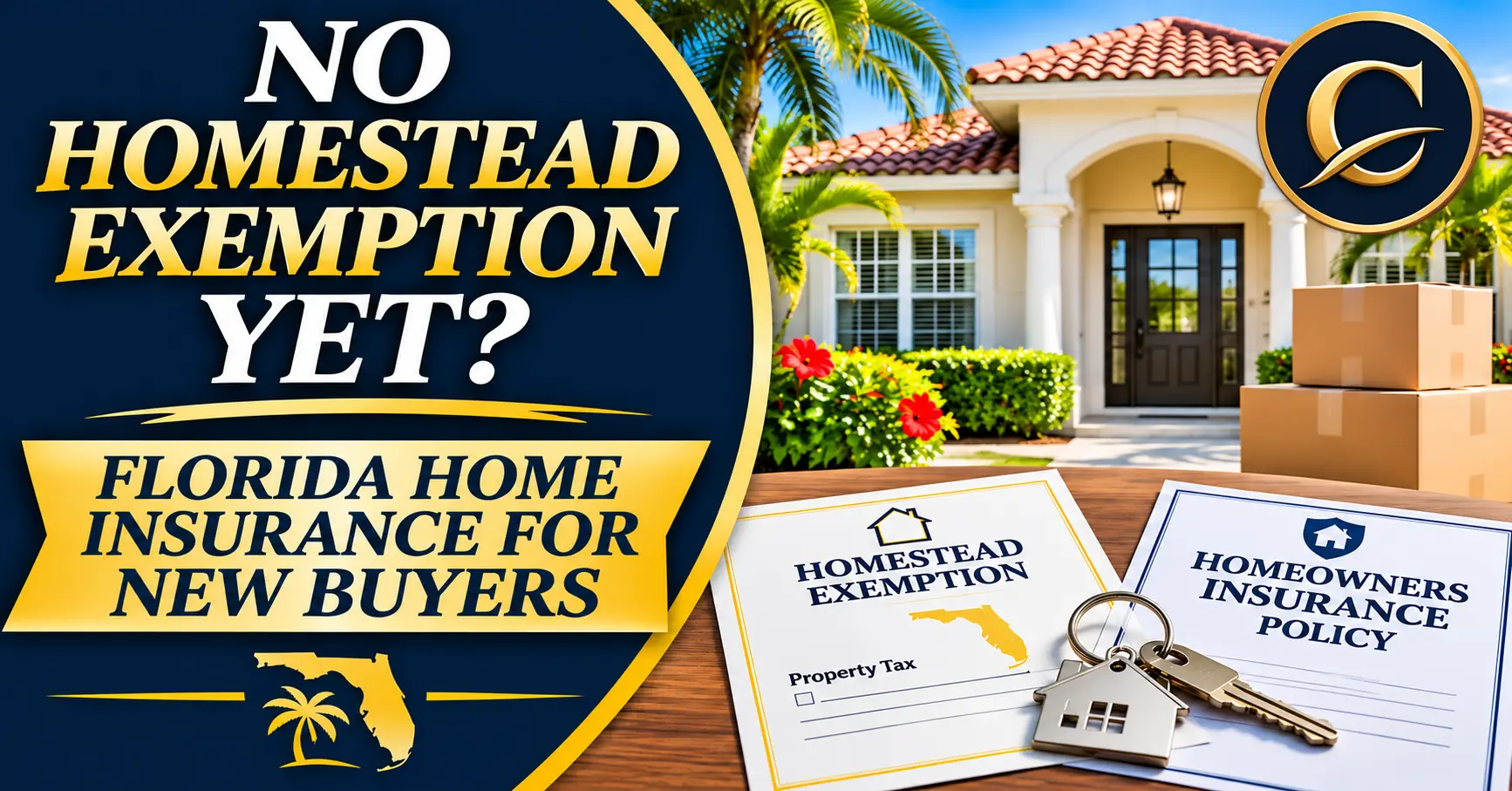
Why Might an Insurance Company Ask About Your Homestead Exemption?
Insurance applications frequently distinguish an owner-occupied primary home from a second home, seasonal home, rental property or vacant house. That classification can affect coverage eligibility, conditions and pricing. Some insurers use homestead-exemption records as one form of evidence of primary residency, but their documentation requirements vary.
For example, Citizens Property Insurance Corporation has published guidance addressing proof of primary residence and the role homestead exemption status can play. Citizens’ rules should not be treated as requirements imposed by every private Florida insurance company. If you do not have an exemption yet, your agent can find out whether the specific insurer accepts other proof of residency or needs a different occupancy classification.
Important: Do not claim the home is already your primary residence simply to obtain a particular rate or policy form. Tell the agent where you live now, when you actually intend to move, and whether anyone else will occupy the property before then.
Can I Get Insurance at Closing If I’m Moving to Florida From Another State?
Often, yes. Many relocating buyers need insurance to begin on the closing date, long before a homestead application is processed. The property may be insured if a company accepts the planned occupancy and the home’s other underwriting characteristics. Your agent may need an anticipated move-in date, inspection information, and an explanation of whether the house will be empty between closing and arrival.
Our related guides explain whether Florida home insurance must start on closing day and how a vacant house at closing can affect coverage. These details are often more important to the insurer’s initial underwriting decision than the fact that you have not filed a homestead exemption.
What If the Florida House Is My Second Home Instead?
If you plan to continue living primarily in another state and visit your Florida property only part of the year, describe it as a second or seasonal home, not as your full-time residence. Suitable homeowners or dwelling options may be available, depending on the carrier, frequency of visits, whether the property is rented, and other risk details. A Florida homestead exemption generally is not available for a property that is not your qualifying permanent residence; that tax distinction does not by itself prevent the property from being insured.
Tell your agent about any rental plans, including short-term rental use, because the correct insurance form or endorsements may differ from an ordinary owner-occupied policy.
When Can New Florida Buyers Apply for the Homestead Exemption?
Florida’s Department of Revenue homestead application states that the applicant generally must establish permanent residency by January 1 of the tax year for which the exemption is sought, and the standard application deadline is March 1. Eligibility depends on the facts and applicable law, and some counties provide information about late filing or special circumstances. The county property appraiser, not your homeowners insurance company, makes the tax-exemption determination.
For example, buying a home late in 2026 does not automatically mean you qualify for a 2026 homestead exemption. Whether you qualify for the 2027 tax year depends on meeting the relevant requirements as of January 1, 2027 and filing appropriately. Check directly with the property’s county property appraiser rather than assuming an insurance binder establishes tax residency.
Learn more from the Florida Department of Revenue homestead exemption application and the Florida Department of Financial Services homeowners insurance overview.
Does Homestead Status Automatically Lower My Florida Insurance Premium?
Not necessarily. An insurer may price or classify primary residences differently from secondary or seasonal homes, but there is no universal Florida homeowners insurance discount simply because your tax records show a homestead exemption. Any effect depends on the individual carrier’s rates, occupancy rules, eligibility and accepted documentation. Some insurers may offer a lower price to an eligible primary residence than to a comparable seasonal home; others assess the risk differently.
Much of your premium can also depend on the home’s location, replacement cost, roof age, construction, deductible, wind protection, and insurance history. You can request Florida homeowners insurance quotes while you work through the tax filing separately.
What Should You Tell Your Agent When Requesting Quotes?
To avoid unnecessary delays, have these details ready:
- Closing and policy start date: When will you own the property, and when must insurance be effective?
- Current address: Where do you live now, and is that still your primary residence?
- Intended Florida move-in date: When do you realistically expect to begin living in the new house?
- Interim occupancy: Will the home be vacant, furnished but unoccupied, or used by someone else before you arrive?
- Property details: Roof age, construction, updates, inspection reports, and any renovation plans.
- Property use after moving: Full-time primary residence, seasonal home, or rental.
If you are still waiting for a Florida driver’s license, our guide to getting Florida home insurance without a Florida driver’s license addresses a related relocation question. If your closing date shifts, see changing the insurance start date when closing is delayed.
Can You Get Florida Homeowners Insurance Quotes Before Your Homestead Is Approved?
Yes. Start shopping when you know which home you are purchasing and the anticipated closing date. You can compare available carriers while you arrange inspections, lender paperwork and the move. Be straightforward about occupancy: if your situation changes after the policy begins, notify the agent so the company can evaluate whether the current coverage remains appropriate.
Robert Colucci Insurance can help Florida buyers review available coverage choices across multiple carriers. The appropriate policy will depend on the actual property and circumstances; eligibility, price and coverage are subject to underwriting and policy terms. For a starting point, visit our Florida home insurance quote page or read the Florida home insurance guide for out-of-state buyers.

Get Florida Home Insurance Quotes
Frequently Asked Questions
Is a Florida homestead exemption required for homeowners insurance?
No. A tax homestead exemption is not a universal condition for obtaining Florida homeowners coverage. Your insurer may require accurate occupancy information and may request evidence of primary residency for specific policy types or pricing.
Can I insure a Florida home before I become a permanent Florida resident?
Possibly, yes. Carriers may insure a new purchase with a disclosed future move-in date or as a second home, subject to underwriting. Do not misstate your present occupancy or residency.
Does a Florida homestead exemption prove my home is owner-occupied?
It can be one piece of evidence, but the insurance company evaluates actual occupancy and may require additional documentation. A tax exemption does not override the insurer’s policy rules.
Can I apply for the exemption after buying my Florida home?
Yes, if you meet the applicable eligibility requirements. The standard tax-year qualification date is January 1 and the normal filing deadline is March 1. Ask your county property appraiser about your specific eligibility and filing options.
What if I have no homestead exemption because this is a vacation home?
Tell your agent that the property is seasonal or a second home. A different policy classification may be appropriate; lack of a homestead exemption does not automatically make the property uninsurable.
Bottom line: You do not need to put your Florida insurance shopping on hold while waiting for a homestead exemption. Get accurate quotes based on your planned and actual occupancy, and handle the property-tax application through the county. Request Florida home insurance quotes before your closing date.
If you’d like help reviewing home insurance options or need a quick binder for a lender or renewal, I make the process simple for your next real estate closing or policy update.
Florida Relocation Guides & Buyer Questions
Out-of-State Buyer Guides & Insurance Tips
- Michigan Buyers: How to Compare Florida Insurance Carriers From Out of State
- New York Buyers: How to Get a Florida Insurance Binder From Out of State
- Insurance Tips for Out-of-State Buyers in The Villages
- How Out-of-State Buyers Can Choose the Right Florida Home
- What Out-of-State Buyers Should Know About Florida Home Inspections
- Out-of-State Buyers: Florida Home Inspection Requirements Explained
- Why Florida Insurance Works Differently for Out-of-State Buyers
Florida Relocation Buyer Questions
- Can I Buy Florida Homeowners Insurance Before I Move There?
- Can I Get Florida Home Insurance Without a Florida Driver’s License?
- Can I Insure a Florida Home Before I Sell My House in Another State?
- Can I Get Florida Home Insurance Quotes Before Making an Offer?
- Does My Florida Homeowners Insurance Have to Start on Closing Day?
- Can I Use an Out-of-State Mailing Address for Florida Homeowners Insurance?
- Can I Get Florida Homeowners Insurance if I’m Moving in 30 Days?
- Can I Arrange Florida Homeowners Insurance Without Visiting the Property?
- Do Out-of-State Buyers Need a Four-Point Inspection for Florida Home Insurance?
- Do Out-of-State Buyers Need a Wind Mitigation Inspection for Florida Home Insurance?
- Can I Change My Florida Homeowners Insurance Start Date If My Closing Is Delayed?
- Can I Get Florida Homeowners Insurance If the Seller Stays After Closing?
- Can I Get Florida Homeowners Insurance If I Renovate Before Moving In?
- Can I Get Florida Homeowners Insurance If the House Is Vacant at Closing?
- Do I Need a Florida Homestead Exemption to Get Homeowners Insurance?
Related Florida Insurance Pages
Florida Insurance Products & Coverage
Florida Home Insurance Buyer Guides
- New Construction Home Insurance
- Out-of-State Buyers Home Insurance
- First-Time Homebuyer Insurance Guide
- Citizens Flood Insurance Requirement
- Can a Smart Water Shutoff Valve Lower Florida Home Insurance Costs?
- Can I Switch Florida Homeowners Insurance Companies in the Middle of My Policy?
- How to Find the Best Florida Home Insurance Quotes Online
Florida Insurance by County & Town
Insurance Resources & Agent Information
Florida insurance content authored by Robert Colucci— underwriting insights and local market analysis for every Florida county & town.
Get a Florida Home Insurance Quote
No matter where you live in Florida, I can help you compare rates from multiple carriers and find the best homeowners insurance options for your property.
Ready to Get Started?
I’m here to help you find the right coverage at the right price — with no pressure and no confusion.
