
Can I Get Florida Homeowners Insurance If I Renovate Before Moving In?
Can You Insure a Florida Home That Needs Renovations Before You Move In?
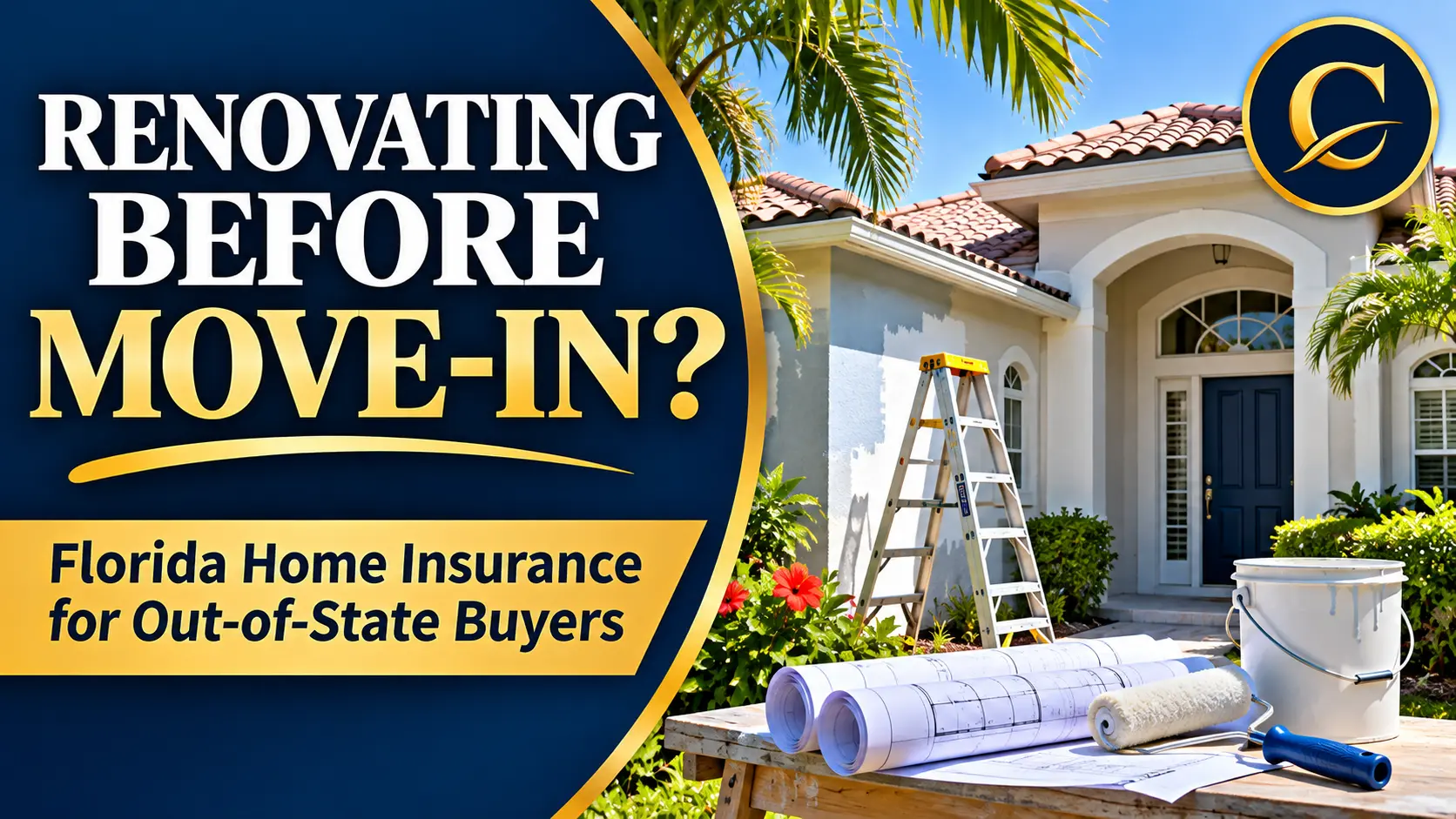
Yes, you may be able to obtain Florida homeowners insurance if you plan to renovate the house before moving in, but the work and your actual occupancy plans must be disclosed before coverage is bound. A home that needs minor cosmetic improvements may qualify differently from one undergoing extensive renovation, structural work, or a prolonged period without occupants. Depending on the project and the insurance carrier, you might need a conventional homeowners policy, a specialty dwelling or vacant-home policy, or a builders risk arrangement instead.
For an out-of-state buyer, renovating before moving in can make perfect sense. You may want new flooring, updated bathrooms, fresh paint, or a new kitchen before the moving truck arrives. But from an insurer’s perspective, a house that is temporarily unoccupied and being worked on is not necessarily the same risk as a finished, occupied primary residence. The important step is to explain the work before closing, not after a contractor has already opened the walls.

Get Florida Home Insurance Quotes
Does the Type of Renovation Affect Florida Home Insurance Eligibility?
Absolutely. Insurers may distinguish ordinary maintenance and cosmetic improvements from substantial renovation. For example, replacing carpet, painting rooms, and installing cabinet hardware may be viewed differently from removing a roof, rewiring the home, replacing plumbing throughout, gutting bathrooms, or making structural alterations.
Major work can create additional exposures such as temporary openings to rain, inactive utilities or fire-protection systems, theft of stored construction materials, and damage associated with contractors. Some insurance companies may approve a limited project subject to conditions; others may decline to write a standard homeowners policy until repairs are complete. Carrier rules and the policy form control the outcome.
Florida’s Department of Financial Services homeowners insurance overview explains that policy forms and underwriting decisions depend on property characteristics and insurer requirements. Do not assume that being approved for a mortgage means the house qualifies for a particular homeowners policy.
Can I Buy an Owner-Occupied Policy If I Will Not Move In Immediately?
Possibly, with the insurer’s approval. An owner-occupied homeowners quote is generally based on representations about how the house will be used. If you will remain in another state while work takes place, tell the agent the expected move-in date, whether the property will be furnished, how often anyone will visit, and whether contractors will have access.
A delayed move-in does not automatically make every property ineligible. But saying the home is already your occupied primary residence when it is actually sitting empty during renovations can cause underwriting or claim problems. The insurer should know the true situation when it decides whether to offer coverage.
For the related question of arranging coverage from another state, read Can I Buy Florida Homeowners Insurance Before I Move There?.
Is an Unoccupied House the Same as a Vacant House?
Not necessarily. Insurance policies may distinguish a furnished home whose residents are temporarily away from an empty house without normal household contents or regular occupancy. Different policy forms also use different definitions, time periods, and restrictions. You should not rely on a universal rule that every house becomes vacant after a certain number of days.
Vacancy or unoccupancy provisions may limit certain losses, depending on the policy. This is especially important if the property will be empty for weeks or months while renovations are underway. Ask the insurance agent to confirm how the proposed policy treats both the anticipated occupancy and the planned construction activity.
When Might a Vacant-Home or Builders Risk Policy Be Necessary?
If the home will be substantially renovated before anyone can live there, a standard owner-occupied homeowners policy might not be the appropriate starting point. Depending on the property and work, an insurer may consider a specialty dwelling or vacant-property form, a builders risk policy, or another approved arrangement.
Builders risk coverage is not automatically necessary for every remodel, and it is not automatically comprehensive. It generally focuses on property exposures during construction, subject to the form’s insured property, covered causes of loss, limits, exclusions, deductibles, and termination provisions. Personal liability coverage, contractor liability, theft of materials, flood, and windstorm may require separate review rather than an assumption that all are included.
The Florida Department of Financial Services discusses builders risk as a possible option for property under construction in its Homeowners’ Insurance Toolkit. The appropriate policy still depends on the insurer and the actual project.
Will Homeowners Insurance Cover Damage Caused by Renovation Work?
Do not assume it will. A covered fire or wind loss is different from damage caused by faulty workmanship, improper installation, defective materials, or a contractor’s mistake. Depending on the policy, those causes may be excluded or limited even when resulting damage is treated differently. Materials and appliances stored on the site can also have special coverage conditions.
Before work starts, ask what coverage applies if a contractor damages the house, if rain enters through an opened roof, or if new materials are stolen before installation. Confirm the contractor’s liability insurance and workers’ compensation arrangements where applicable, but remember that a contractor’s policy is not a substitute for correctly insuring your own building.
What If the Florida Home Needs a New Roof or Has Existing Damage?
This is a particularly important distinction. Planned cosmetic upgrades are not the same thing as an existing roof leak, unrepaired storm damage, unsafe electrical conditions, or other active defects. A carrier may require completed repairs, acceptable inspection results, or other documentation before it agrees to insure the property.
If you’re buying a home that needs a new roof, tell the agent whether the roof is merely aged, whether it is currently leaking, whether a replacement contract has been signed, and when the work will be completed. Do not represent unfinished repairs as finished. A four-point inspection may identify conditions that require attention before coverage can be placed.
For more on that inspection, see Do Out-of-State Buyers Need a Four-Point Inspection for Florida Home Insurance? and Do Out-of-State Buyers Need a Wind Mitigation Inspection for Florida Home Insurance?.
Can Renovations Affect My Mortgage Closing?
Yes. If the purchase is financed, the lender will normally want acceptable insurance effective by closing. Depending on the loan program, the lender may also have requirements concerning the home’s condition, occupancy, repair escrows, and construction coverage. A policy that meets the insurer’s requirements may still need separate lender approval.
If the house is not currently habitable, discuss that with the lender early. Similarly, if you plan to renovate after closing rather than before, verify that the insurance arrangement is suitable for the entire period. You do not want to discover a problem after the closing date is set or a contractor’s deposit has been paid.
What Information Should an Out-of-State Buyer Provide Before Requesting Quotes?
Giving the agent a clear renovation timeline makes it easier to find realistic options. Be ready to explain:
- Closing date and expected move-in date: When will you own the home, and when will anyone actually live there?
- Current condition: Is the house habitable now, or are there existing roof, plumbing, electrical, water-damage, or safety issues?
- Scope of renovation: Cosmetic updates, full kitchen or bath replacement, roof replacement, major systems, additions, or structural changes?
- Project duration and cost: How long will the work last, and what is its approximate value?
- Property access and occupancy: Will the home remain furnished, empty, regularly checked, or occupied by anyone?
- Contractors: Who will perform the work, and are they appropriately licensed and insured for the work involved?
- Financing: Is there a mortgage or renovation loan with particular insurance requirements?
Also disclose whether utilities will be shut off, whether the roof or exterior will be opened, and whether construction materials will be stored on the property. Ask for the carrier’s requirements and any occupancy or renovation conditions in writing.
Should I Change Insurance Once Renovations Are Finished?
Often, the completion of work and the start of normal owner occupancy are appropriate times to review the policy. A temporary specialty arrangement may not be intended to continue indefinitely. Depending on the contract and carrier, a new homeowners policy, endorsement, updated reconstruction estimate, or other change may be needed.
Keep invoices, permits, final inspection documents, and photos of completed improvements. If you replace a roof or install eligible wind-protection features, ask whether a new wind-mitigation inspection could document credits for which you qualify. Changes in square footage or interior finishes may also affect the amount of dwelling coverage needed.
Can I Get Florida Homeowners Insurance Quotes Before Renovations Begin?
Yes—and that is the best time to start the conversation. Buying a Florida house to renovate before moving in does not automatically mean coverage is unavailable. It means the insurance needs to match the home’s actual condition, the planned work, and the occupancy timeline. Waiting until after closing or construction has started can make the options more difficult.
I help buyers moving from other states compare Florida insurance options and identify the underwriting details that matter before they commit to a closing date. Tell me what work the house needs and when you expect to move in, and we can explore which carriers and policy types may be appropriate.
Start with Florida homeowners insurance quotes, or visit my Florida home insurance guide for out-of-state buyers for more closing and relocation questions.
If you’d like help reviewing home insurance options or need a quick binder for a lender or renewal, I make the process simple for your next real estate closing or policy update.
Florida Relocation Guides & Buyer Questions
Out-of-State Buyer Guides & Insurance Tips
- Michigan Buyers: How to Compare Florida Insurance Carriers From Out of State
- New York Buyers: How to Get a Florida Insurance Binder From Out of State
- Insurance Tips for Out-of-State Buyers in The Villages
- How Out-of-State Buyers Can Choose the Right Florida Home
- What Out-of-State Buyers Should Know About Florida Home Inspections
- Out-of-State Buyers: Florida Home Inspection Requirements Explained
- Why Florida Insurance Works Differently for Out-of-State Buyers
Florida Relocation Buyer Questions
- Can I Buy Florida Homeowners Insurance Before I Move There?
- Can I Get Florida Home Insurance Without a Florida Driver’s License?
- Can I Insure a Florida Home Before I Sell My House in Another State?
- Can I Get Florida Home Insurance Quotes Before Making an Offer?
- Does My Florida Homeowners Insurance Have to Start on Closing Day?
- Can I Use an Out-of-State Mailing Address for Florida Homeowners Insurance?
- Can I Get Florida Homeowners Insurance if I’m Moving in 30 Days?
- Can I Arrange Florida Homeowners Insurance Without Visiting the Property?
- Do Out-of-State Buyers Need a Four-Point Inspection for Florida Home Insurance?
- Do Out-of-State Buyers Need a Wind Mitigation Inspection for Florida Home Insurance?
- Can I Change My Florida Homeowners Insurance Start Date If My Closing Is Delayed?
- Can I Get Florida Homeowners Insurance If the Seller Stays After Closing?
- Can I Get Florida Homeowners Insurance If I Renovate Before Moving In?
- Can I Get Florida Homeowners Insurance If the House Is Vacant at Closing?
- Do I Need a Florida Homestead Exemption to Get Homeowners Insurance?
Related Florida Insurance Pages
Florida Insurance Products & Coverage
Florida Home Insurance Buyer Guides
- New Construction Home Insurance
- Out-of-State Buyers Home Insurance
- First-Time Homebuyer Insurance Guide
- Citizens Flood Insurance Requirement
- Can a Smart Water Shutoff Valve Lower Florida Home Insurance Costs?
- Can I Switch Florida Homeowners Insurance Companies in the Middle of My Policy?
- How to Find the Best Florida Home Insurance Quotes Online
Florida Insurance by County & Town
Insurance Resources & Agent Information
Florida insurance content authored by Robert Colucci— underwriting insights and local market analysis for every Florida county & town.
Get a Florida Home Insurance Quote
No matter where you live in Florida, I can help you compare rates from multiple carriers and find the best homeowners insurance options for your property.
Ready to Get Started?
I’m here to help you find the right coverage at the right price — with no pressure and no confusion.
